All Categories
Featured
Table of Contents

Technical Realities of Global SEO Facilities in 2026
The technical requirements for handling search presence at a worldwide scale have actually reached a level of complexity that requires more than simple keyword optimization. In 2026, the focus has moved towards the underlying architecture that supports content shipment throughout disparate regions. Big business now handle high-latency networks, local information sovereignty laws, and the increase of generative online search engine that take in information in a different way than standard crawlers. Success frequently depends on effective Full-Cycle Search Platforms to preserve a technical foundation that remains unnoticeable yet reliable.
Modern worldwide facilities relies heavily on edge-side logic. Counting on a central origin server to handle requests from Tokyo, London, and New york city simultaneously is no longer a viable strategy for organizations focusing on speed. Instead, SEO setups-- including redirects, hreflang tags, and even some schema markup-- are now injected at the edge layer. This approach makes sure that online search engine bots receive the appropriate regional variation of a page in under 50 milliseconds, despite where the spider is based. By moving these calculations far from the main application server, teams reduce the danger of server timeouts and crawl budget plan waste.
One specific area where this matters is the management of localized material for Features To Get You From Strategy To Serp. When a site spans fifty nations and thirty languages, the traditional approach of hardcoding language alternates into the HTML head creates massive file sizes. Technical leads in 2026 choose utilizing XML sitemaps or edge-injected headers to manage these relationships. This keeps the file object model lean, which is an important factor for the performance metrics that search engines prioritize this year.
Scalable Data Management for Features To Get You From Strategy To Serp
The separation of material and discussion has actually moved from a pattern to a requirement. Headless CMS architectures are the requirement for 2026, enabling SEO teams to press structured data to various endpoints without disrupting the work of front-end designers. This decoupling enables for rapid screening of structured information types, such as Product bits or Organization graphs, throughout countless pages at the same time. Dependability in this area is vital, as generative search engines count on this structured information to construct their internal models of a brand name.
Managing this volume of information requires a shift in how groups approach quality assurance. Handbook check are insufficient when dealing with countless URLs. Automated testing suites now sit within the CI/CD pipeline, particularly created to catch SEO regressions. If a designer inadvertently eliminates a canonical tag or breaks a JSON-LD script throughout an implementation, the construct is automatically rolled back. This level of automated oversight is common for Advanced Full-Cycle Search Platforms as companies look to protect their organic presence versus human mistake.
Regional variations in search behavior also affect how infrastructure is constructed. In 2026, online search engine in particular markets prioritize various performance signals. While one engine may concentrate on visual stability, another may position greater weight on the time it takes for a user to communicate with the very first aspect on the screen. A global SEO infrastructure should be flexible adequate to serve various optimizations based upon the user representative or the IP address of the requester. This "adaptive delivery" design guarantees that the website fulfills the specific technical criteria of local search platforms without bloating the experience for everyone else.
Dealing With Local Compliance and Data Residency
Information residency laws have introduced a new layer of friction for global SEO. In several jurisdictions, user data and certain kinds of content must be hosted within particular borders. This produces a fragmented hosting environment where a single domain may be served from 3 or 4 different cloud service providers. Integrating SEO signals throughout these environments is a main difficulty. A modification made to the international navigation for Features To Get You From Strategy To Serp must propagate through every regional server cluster simultaneously to prevent index fragmentation.
Consistency is the objective. If the version of a page in Germany shows different metadata than the variation in France-- presuming they are the same language-- online search engine may view the site as undependable or vulnerable to duplication. Modern setups utilize a global state supervisor that functions as a single source of fact for SEO metadata, making sure that every local circumstances pulls the exact same tags and instructions from a centralized database.
The Advancement of Bot Management and Crawl Performance
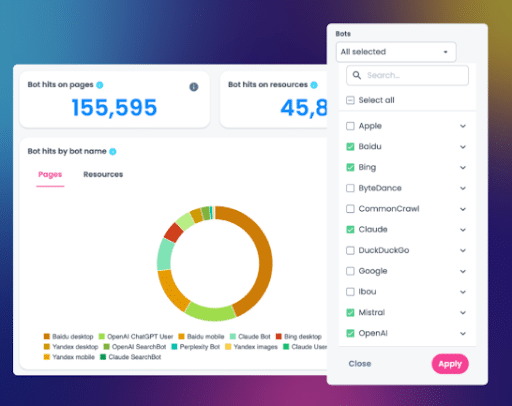
In 2026, the volume of bot traffic has actually increased due to the expansion of AI training scrapers. Comparing a useful search spider and a resource-heavy AI scraper is a full-time infrastructure job. International organizations now use advanced firewall rules to focus on "validated" bots, guaranteeing that engines like Google or Bing have a clear course to the material while restricting the rate of less handy scrapers. This management of crawl demand is vital for maintaining site efficiency during peak traffic periods.

Enterprises prioritize Full-Cycle Search Platforms for Business when expanding into brand-new areas where bot habits may differ from Western standards. Some local engines crawl more aggressively, while others might only check out a site when a month. The facilities needs to have the ability to spot these patterns and adjust server resource allocation accordingly. If a particular spider is known to overlook robots.txt instructions, the edge layer can be configured to serve a streamlined variation of the page or a cached photo to conserve origin resources.
Crawl budget plan optimization has actually also approached "push" instead of "pull" indexation. Instead of waiting on a bot to find brand-new content, technical groups use Indexing APIs to notify online search engine of modifications the moment they take place. This real-time interaction is managed by a devoted microservice that keeps track of the CMS for updates and right away pings the pertinent search platforms. For Features To Get You From Strategy To Serp, this reduces the time-to-index from days to minutes, which is a substantial benefit in competitive markets.
Monitoring Global Health by means of Artificial Testing
Traditional analytics are frequently too slow to recognize technical failures in a global SEO setup. By the time a drop in traffic is observed in a dashboard, the concern might have been active for forty-eight hours. In 2026, teams use synthetic monitoring that imitates search spiders from various worldwide places every hour. These scripts look for status codes, the existence of important meta tags, and the appropriate rendering of JavaScript aspects.
If the synthetic crawler in Singapore identifies a 404 mistake on a high-value page that is working fine in London, the system sets off an immediate alert. This localized tracking is the only method to capture regional DNS issues or CDN caching mistakes that would otherwise go undetected. This proactive stance on maintenance is what separates effective international gamers from those who are constantly responding to traffic losses.
The function of the technical SEO has changed. It is no longer simply about tags and keywords but about system architecture and network reliability. As search engines become more incorporated with AI and as users expect immediate results, the margin for mistake in international facilities has narrowed. Organizations that treat their SEO setup as a core engineering discipline, instead of a marketing add-on, discover themselves much better placed to handle the shifts that 2026 has actually brought to the digital world. Speed, reliability, and local precision are the 3 pillars that support organic development at scale.

Eventually, the goal is to create a predictable environment where material can be found and comprehended by any device, anywhere. This needs a consistent assessment of how data relocations from the server to the internet browser and how online search engine interpret that movement. By focusing on edge-side reasoning, automated screening, and intelligent bot management, companies can preserve a strong existence in the worldwide search index despite its increasing intricacy.

Latest Posts
Structure Resilient Backends for Dedicated Ip Seo Networks With Menterprise
Why Strategic Facilities Is the Key to 2026 Search
Future-Proof SEO Tactics for Competitive Landscapes